The concept of “traction” is polysemous and is used across a range of disciplines. In its most basic sense, it relates to transport and engineering, where it denotes the pulling force of a vehicle or the system of mechanisms that sets a vehicle in motion, as in steam, diesel or electric traction. In medicine, it refers to the stretching of limbs or the spine using specialised equipment.
In the Earth sciences, the term “traction transport”, also known as “bedload transport”, describes the movement of rock particles, sand or silt along a riverbed under the force of the current.
This process contributes to the shaping of the landscape through the movement and deposition of new layers of sediment and, over time, through changes in river channels and the formation of new geological structures.
It was this final meaning that proved particularly inspiring to us. The hydrological metaphor allows us to describe art not as a finished product, but as a dynamic process in which visual, performative and sonic impulses meet, permeate one another and generate new configurations of meaning.
In this sense, the term “traction” best captures the character of our practice. It points to processuality—to becoming and transformation; to flow—the exchange of energy between artists and audiences; and to collectivity, since every action emerges from the encounter of multiple artistic perspectives.
We therefore understand a “traction event” as an open space of experimentation in which different art forms—film, theatre, photography, performance and music—undergo transformation, and in which their interaction gives rise to new qualities. It is not a technical category, but an artistic figure that captures the nature of creative practice: mobile, ephemeral and, at the same time, capable of becoming embedded in the memory and experience of its participants.
The multidimensional nature of the term itself—combining technical, medical and natural meanings—opens it up to artistic use. Each of these meanings contains the idea of energy: a force that sets something in motion, a tension that leads to change, or a current that carries and transforms matter. It is precisely this energy, and its capacity to transform its surroundings, that forms the foundation of the metaphor of “traction” in relation to artistic practice.
Traction is a creative practice. It is neither a genre nor a discipline. It does not classify a performance, film or exhibition; rather, it describes the way in which they take shape through a process. “Traction” signifies a flow of energy that carries, accumulates and deposits. Just as river silt forms a new channel from seemingly shapeless particles, our actions—encountering materials, impulses and images along the way—constitute a space for art.
Traction recognises no hierarchy. Actor, director, set designer, photographer, performer—we all participate in a process founded on equality. Every element has its own weight, and its place is determined not by a traditional division of roles, but by the dynamics of collaborative creation. A traction event emerges wherever trust in the unknown becomes a source of new qualities and experimentation replaces the plan.
Traction is the driving force of art. In the technical sense, it is the energy that sets a vehicle in motion; in the artistic sense, it is the energy of a process that continuously generates new forms. In the social sense, traction means attraction: the creation of situations that command attention and provoke an exchange of ideas. Every traction event is therefore both a laboratory and a meeting place—a space in which different fields of knowledge and forms of creative experience are brought together.
We do not create finished works; we set flows in motion. We do not close meanings down, but allow them to accumulate, overlap and shift. The art object is not the goal, but a trace of the process. A traction event exists as an experience—open, unpredictable and transformative.
We proclaim traction as a form of art expressed through movement, accumulation and deposition. It is the art of a future understood as continuous change; the art of community rather than individual ownership; the art of flow rather than the closed work. This is where we see the meaning of our project and its place within the broader tradition of avant-garde experimentation: traction does not describe—it sets things in motion.
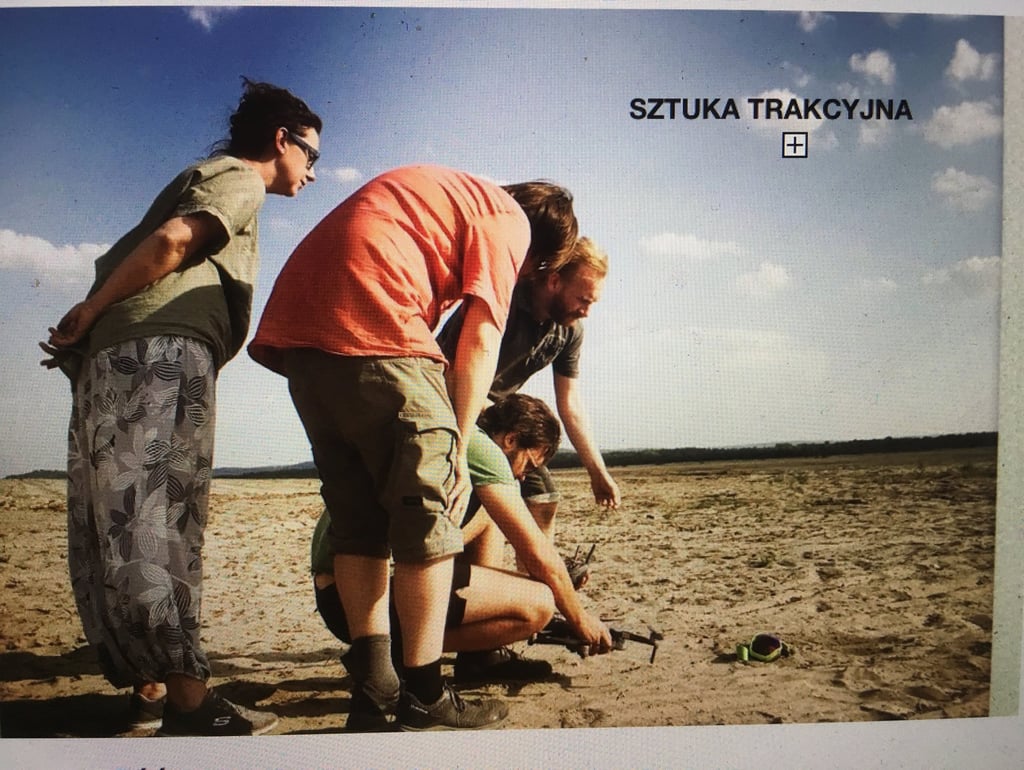
Traction Event
Traction Manifesto






Contacts
Krzysztof Ogłoza
phone; +48 608519443
e-mail: krzysztof.ogloza@gmail.com